If Found on Land Please Throw Back into the Ocean: A Practical SVG Design for Creators and Makers
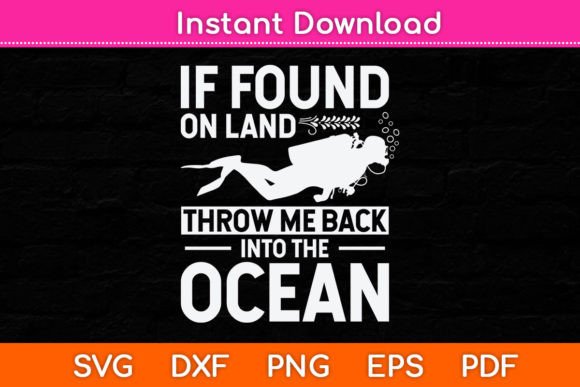
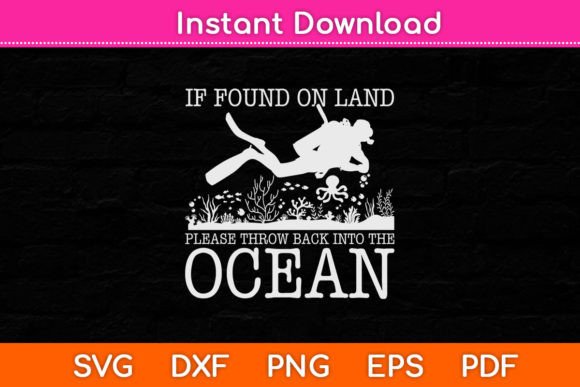
“If Found on Land Please Throw Back into the Ocean” is more than a whimsical phrase—it’s a functional, versatile design asset built for real-world creative workflows. This SVG file set delivers a nautical-themed message with clear visual hierarchy, clean vector paths, and intentional spacing—making it ideal for crafters, small business owners, educators, and DIY enthusiasts who rely on precision-cut materials. Unlike generic clipart or low-res graphics, this collection is engineered for compatibility, scalability, and repeatable use across physical and digital outputs.
How It Fits Into Your Creative Process
This design doesn’t exist in isolation. It integrates at multiple points in a project lifecycle—before, during, and after execution. Before starting a vinyl decal run for a dive shop’s merchandise line? You’ll import the SVG to test fit, adjust sizing, and align layers in Cricut Design Space or Silhouette Studio. During a classroom activity on marine conservation, educators can pull the PDF version to print and laminate durable flashcards—or use the PNG for a slide deck illustrating responsible ocean stewardship. After completing a custom apparel order, the EPS file ensures crisp embroidery digitizing or screen-print separation without pixelation or distortion.
The phrase itself serves as both content and context: it signals purpose (ocean awareness), tone (playful yet purposeful), and audience alignment (scuba divers, eco-conscious buyers, coastal businesses). That dual function makes it adaptable—not just decorative, but communicative.
Compatibility and Setup: What You Need to Know
This is an instant-download digital product containing five core file types: SVG, PNG, DXF, EPS, and PDF. Each serves a distinct role in your toolkit:
- SVG: Primary format for Cricut Explore, Cricut Maker, and Silhouette Cameo users. Supports layers, color grouping, and cut-line optimization.
- PNG: High-resolution (300 DPI) raster image for print-on-demand platforms, social media graphics, or digital presentations where vector editing isn’t required.
- DXF: Universal vector format compatible with laser cutters, CNC routers, and older versions of CorelDRAW or AutoCAD—useful for wood signs or acrylic coasters.
- EPS: Industry-standard scalable vector for professional print houses, graphic designers using Adobe Illustrator, or large-format signage.
- PDF: Print-ready layout with embedded fonts and bleed marks—ideal for quick paper crafts, invitations, or handouts without software setup.
Before downloading, confirm your machine and software support the formats you plan to use. Cricut Design Space reads SVG natively but not EPS; Silhouette Studio requires Designer Edition+ for SVG import. If you’re using a Glowforge or Boss Laser, DXF or PDF often yields more predictable results than SVG. Testing one file type first—especially the SVG—helps avoid scaling surprises or unintended layer splits.
Practical Implementation Across Use Cases
Real-world application reveals how this single design supports diverse goals:
Small Business Branding & Merchandise
A dive instructor launching a new certification course uses the SVG to create vinyl decals for water bottles and wetsuit hangers. They resize the design in Cricut Design Space to fit standard 3″ x 4″ bottle labels, then duplicate and recolor elements for a matching Instagram story template (using the PNG). The consistency across physical and digital touchpoints reinforces brand voice—lighthearted, mission-driven, and ocean-literate.
Educational Materials
An elementary science teacher prints the PDF version onto cardstock, cuts out individual letters with scissors (no machine needed), and uses them in a “message relay” activity about marine debris. Later, they embed the PNG into a Google Slides lesson on habitat restoration—linking the visual cue directly to curriculum standards on human impact and environmental responsibility.
Event Planning & Personal Projects
A wedding planner incorporates the phrase into custom beach-themed invitations. Using the EPS file in Adobe InDesign, they overlay it subtly on vellum overlays and match font weight to the couple’s monogram. For guest favors, they cut the SVG from biodegradable kraft paper to wrap mini reef-safe sunscreen samples—tying aesthetics to values without extra copywriting.
Workflow Optimization Tips
To maximize efficiency and minimize rework:
- Organize by output type: Create folders labeled “Vinyl,” “Print,” “Embroidery,” and “Digital”—then place only the relevant file format in each. Avoid mixing SVG and PNG in the same folder unless naming conventions clearly distinguish use case (e.g., “throwback_ocean_vinyl.svg”, “throwback_ocean_social.png”).
- Verify dimensions before cutting: Always check the bounding box in your design software. Some machines interpret SVG units differently—Cricut defaults to inches, while Silhouette may default to millimeters. A quick unit toggle prevents oversized or undersized cuts.
- Preserve layers for flexibility: The SVG includes grouped elements (text, wave accents, optional anchor icon). Keep layers intact until final export—if you need only the phrase without illustration, hide rather than delete the extra layer. That preserves options for future variations.
- Test on scrap material first: Especially with heat-transfer vinyl or textured substrates like cork or canvas. The clean vector lines hold up well, but adhesion and weeding behavior depend on surface texture and machine pressure settings—not the file itself.
Long-Term Usability and Quality Control
This design was created with longevity in mind. All vector paths are simplified—not over-noded—so they scale cleanly from 1 inch to 36 inches without jagged edges or rendering errors. Fonts are converted to outlines, eliminating missing-font warnings across devices or software updates. Color values are standardized in RGB and CMYK, supporting both screen display and commercial printing.
For teams or collaborative projects, store the master files in a shared cloud drive with version notes (e.g., “v2.1 – added anchor icon, optimized stroke width for 0.5mm vinyl”). That reduces confusion when multiple people access the assets—and ensures consistency whether someone is making a t-shirt for a local beach cleanup or designing a presentation for a marine nonprofit board meeting.
Where It Adds Value—Without Adding Complexity
“If Found on Land Please Throw Back into the Ocean” works because it meets a specific need without demanding new habits. You don’t need to learn new software, adopt unfamiliar workflows, or overhaul existing systems. It slots into what you already do—cutting, printing, teaching, selling, designing—with minimal friction. Its value lies in reliability: consistent quality, cross-platform readiness, and clarity of intent. Whether you’re prototyping a product line, preparing a lesson, or personalizing gear, it delivers usable output—not just pixels or vectors, but purpose-built communication.
No special training is required. No subscription unlocks features. Just download, open, adjust if needed, and apply. That simplicity—grounded in thoughtful file preparation—is what makes it a quietly essential part of many makers’ digital toolkits.